

Get practical advice and insights

All updates must be accompanied by text or a picture.

Featured

Does this look concerning

A MySkinCancerTeam Visitor · 1 answer
View Answers

I have a very specific mole on my back it gets really angry at times breaks open & bleeds. At times it itches fiercely. I had a biopy.

A MySkinCancerTeam Visitor · 1 answer
View Answers

Does skin cancer ever itch?

A MySkinCancerTeam Visitor · 1 answer
View Answers

My skin gets irritated by the bandages im to put on it until my follow up appt.

A MySkinCancerTeam Visitor · 1 answer
View Answers

33 questions

Nancy896 asked a question 💭
What Happens If Squamous Cell Carcinoma Is Left Untreated? Read Article...
MySkinCancerTeam

Here's a general overview of how ED&C works, step by step:

1. A local anesthetic is injected to numb the area around the tumor
2. The doctor tests the area to confirm it's fully numb
3. A small tool… read more

Here's a general overview of how ED&C works, step by step:

1. A local anesthetic is injected to numb the area around the tumor
2. The doctor tests the area to confirm it's fully numb
3. A small tool called a curette (a loop-ended instrument) is used to scrape away the tumor
4. Heat, electrical stimulation, or a chemical is applied to the area to stop bleeding and destroy remaining cancer cells
5. Steps 3 and 4 may be repeated 2–3 times depending on how deep the cancer is
6. The wound is then bandaged

Most people recover fairly quickly and can even drive themselves home afterward — though full wound healing can take several weeks. During recovery, proper wound care is important. Here are the key steps:

- Wash hands before touching the wound or changing bandages
- Gently clean the area with soap and water
- Pat dry before applying a new dressing
- Apply a thick ointment before re-bandaging
- Avoid scrubbing or submerging the area in water (pools, baths, etc.)

Watch for signs of complications like infection, unusual swelling, pus, or bleeding that won't stop — and contact your doctor right away if any of these occur.

2 days ago
All updates must be accompanied by text or a picture.
A MySkinCancerTeam Visitor asked a question 💭

Does this look concerning it is near my old melanoma scar
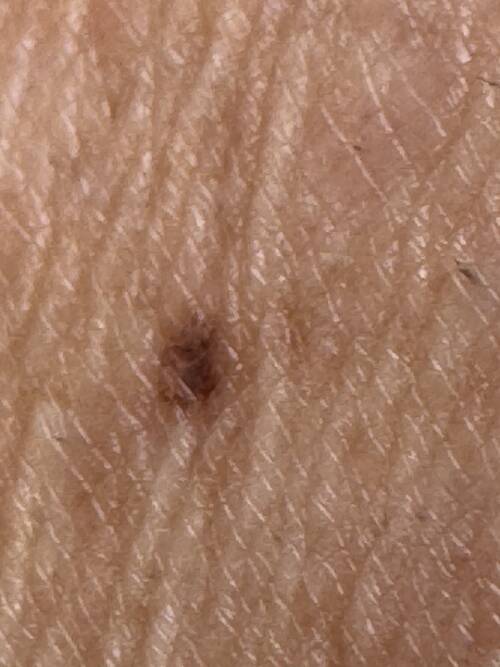
Does this look concerning it is near my old melanoma scar

What Does Basal Cell Carcinoma Look Like? Read Article...
MySkinCancerTeam

That's definitely worth getting checked out, especially given its location near a previous melanoma scar. Unfortunately, images can't be assessed here, but a dermatologist absolutely can — and should… read more

That's definitely worth getting checked out, especially given its location near a previous melanoma scar. Unfortunately, images can't be assessed here, but a dermatologist absolutely can — and should — take a look as soon as possible.

Any new or changing spot near an old scar deserves prompt attention. Here are some general warning signs to watch for:

- A sore that doesn't heal, or heals and keeps coming back
- A rough, scaly, or crusty patch
- A shiny, waxy, or translucent bump
- A spot with raised or irregular edges
- Any growth that itches, bleeds, or changes in size, shape, or color It's important not to rely on pain as a warning sign — many concerning spots don't hurt at all in the early stages.

Please don't wait on this one. Book an appointment with your dermatologist right away and describe exactly what you're seeing, including its location near your scar. Early detection makes a big difference in outcomes.

October 20
All updates must be accompanied by text or a picture.
Basal Cell Carcinoma on the Eyelid: Symptoms and Treatments Read Article...
MySkinCancerTeam

That's a great question to bring up with your care team. GentleCure (Image-Guided Superficial Radiotherapy or IG-SRT) is a form of low-dose radiation, but the available information specifically about… read more

That's a great question to bring up with your care team. GentleCure (Image-Guided Superficial Radiotherapy or IG-SRT) is a form of low-dose radiation, but the available information specifically about eyelid BCC focuses on standard radiation therapy rather than this specific approach.

What is known is that radiation therapy in general can be recommended for eyelid BCC when:

- Surgery is difficult or not a good option
- There is a high risk of surgical complications Because the eyelid is such a delicate area with very thin skin, treatment decisions tend to be highly individualized. The most common approach remains Mohs surgery, which preserves as much healthy tissue as possible.

Since GentleCure is a specialized treatment, it's worth asking a dermatologist or radiation oncologist whether it's appropriate for your specific situation — including the size, depth, and location of the tumor on your eyelid.

October 13
All updates must be accompanied by text or a picture.
A MySkinCancerTeam Visitor asked a question 💭
What Does Basal Cell Carcinoma Look Like? Read Article...
MySkinCancerTeam

Skin sensitivity around wound sites is really common, especially when you're healing after a skin cancer procedure. Adhesive bandages can sometimes irritate the surrounding skin, but there are ways to… read more

Skin sensitivity around wound sites is really common, especially when you're healing after a skin cancer procedure. Adhesive bandages can sometimes irritate the surrounding skin, but there are ways to manage this carefully.

Here are some tips to help protect sensitive skin around a wound:

- Use non-stick pads with medical tape instead of adhesive bandages directly on sensitive skin
- Look for hypoallergenic or silicone-based tapes, which are gentler on delicate skin
- When removing bandages, peel slowly and gently — never rip them off quickly
- Keep the surrounding skin moisturized with a fragrance-free moisturizer to reduce dryness and irritation
- Wash hands thoroughly before touching or changing any dressing

A few things to watch out for that would need a call to your doctor:

- Increasing redness, swelling, or warmth spreading from the wound
- Pus or unusual drainage
- Bleeding that won't stop with gentle pressure
- Stitches opening or the wound seeming to get worse

Always check with your dermatologist or care team before switching products, as some creams or ointments can interfere with healing or make it harder to assess the wound properly.

October 8
All updates must be accompanied by text or a picture.
What Does Basal Cell Carcinoma Look Like? Read Article...
MySkinCancerTeam

It sounds like that mole has been giving you quite a hard time! Having a biopsy done was absolutely the right move. The symptoms being described — bleeding, breaking open, and intense itching — are… read more

It sounds like that mole has been giving you quite a hard time! Having a biopsy done was absolutely the right move. The symptoms being described — bleeding, breaking open, and intense itching — are signs that definitely warrant medical attention, and it's good that's already in motion. These kinds of symptoms can be associated with skin cancer. Here's why they happen:

- Itching — The immune system reacts to abnormal skin cells, causing inflammation that triggers itch signals in nearby nerves
- Bleeding and breaking open — Some skin cancer spots are prone to bleeding even without injury, and can develop into open sores that don't fully heal
- Intense or recurring symptoms — When a spot grows near nerves, it can cause sensations like burning, tingling, or fierce itching While waiting for biopsy results, here are some helpful tips:

- Avoid scratching — it can irritate the skin further and risk infection
- Don't pick at scabs or rough areas around the spot
- Take a clear photo in good lighting to track any changes
- Note any changes in size, color, bleeding, or pain to share with the doctor
- Use a gentle, fragrance-free moisturizer on the surrounding skin if needed
- Avoid strong over-the-counter creams on the spot unless the doctor recommends them The biopsy results will give the clearest picture of what's going on. In the meantime, if the spot bleeds heavily, becomes very painful, or shows signs of infection, don't wait — reach out to the doctor right away.

October 8
All updates must be accompanied by text or a picture.
Skipper asked a question 💭
What Happens if Basal Cell Carcinoma Is Left Untreated? Read Article...
MySkinCancerTeam

Can your regular doctor tell if you have skin cancer?

A general practitioner can take an initial look at a suspicious spot, but a dermatologist is the specialist best equipped to evaluate skin concerns… read more

Can your regular doctor tell if you have skin cancer?

A general practitioner can take an initial look at a suspicious spot, but a dermatologist is the specialist best equipped to evaluate skin concerns properly.

Here's what a skin check typically involves:

- Visual exam — A doctor looks at any new, changing, or unusual spots on your skin
- Dermoscopy — A special magnifying tool with a light for a closer look at suspicious areas
- Biopsy — If something looks concerning, a small skin sample is removed and sent to a lab for analysis

If your regular doctor notices something worth investigating, they will likely refer you to a dermatologist. It's always worth getting a specialist's eyes on anything that worries you — better safe than sorry!

September 17
All updates must be accompanied by text or a picture.
A MySkinCancerTeam Visitor asked a question 💭
MySkinCancerTeam

Yes, skin cancer can definitely itch! It's actually one of the more common symptoms, especially with nonmelanoma skin cancers like basal cell carcinoma (BCC) and squamous cell carcinoma (SCC).

Studies… read more

Yes, skin cancer can definitely itch! It's actually one of the more common symptoms, especially with nonmelanoma skin cancers like basal cell carcinoma (BCC) and squamous cell carcinoma (SCC).

Studies have found itching in nearly half of SCC spots and about a third of BCC spots — so it's far from rare. There are a few reasons why skin cancer can cause itching:

- Inflammation — The immune system reacts to abnormal cells, causing chemicals to gather in the area that can irritate nerves
- Nerve irritation — When a lesion grows near nerves, it can trigger sensations like itching, tingling, or burning
- Skin changes — As cancer cells grow, the skin can become rough, scaly, or crusted, making the area feel irritated An itch alone doesn't automatically mean skin cancer — but a spot that keeps itching AND changes in size, bleeds, crusts over, or simply won't heal is worth getting checked by a dermatologist sooner rather than later.

Early detection really does make a big difference in treatment outcomes!

September 17
All updates must be accompanied by text or a picture.
Robert360 asked a question 💭

located on inner ear

located on inner ear

How Fast Does Squamous Cell Carcinoma Spread? Read Article...
MySkinCancerTeam

Fluorouracil (5-FU) is a topical chemotherapy cream applied directly to the skin to target abnormal cells. It's generally used for precancerous lesions or very early, superficial skin cancers.

It works… read more

Fluorouracil (5-FU) is a topical chemotherapy cream applied directly to the skin to target abnormal cells. It's generally used for precancerous lesions or very early, superficial skin cancers.

It works on the skin's surface, which is why it's typically suited for shallow lesions rather than deeper ones. For the inner ear area, this gets a bit more complex. The ear is considered a sensitive, high-risk location — similar to the nose, eyes, and lips — where preserving healthy tissue matters a lot.

Because of this, a dermatologist may lean toward options like Mohs surgery rather than topical treatments for that area. That said, every case is different and depends on:

- The size and depth of the lesion
- Whether it's precancerous or cancerous
- Your overall health and treatment preferences

The frequency of 5-FU application varies — it's typically applied once or twice daily for several weeks, but your doctor will tailor that to your specific situation.

Definitely worth having a detailed conversation with your dermatologist about whether 5-FU is appropriate for your specific location and lesion type. Regular follow-ups are also important to make sure the treatment is working.

September 15
All updates must be accompanied by text or a picture.
Sue66 asked a question 💭
MySkinCancerTeam

Great question — and totally understandable to wonder about this before going in! The good news is that a biopsy on the tip of the nose is generally not painful during the procedure itself.

Before… read more

Great question — and totally understandable to wonder about this before going in! The good news is that a biopsy on the tip of the nose is generally not painful during the procedure itself.

Before anything is removed, a local anesthetic is injected to numb the area. You may feel a quick pinch or slight burning sensation from that injection, but after that, you shouldn't feel sharp pain.

During the biopsy, you might notice:

- A feeling of pressure or movement
- But no sharp or intense pain

If you do feel pain during the procedure, let your doctor know right away — they can give you more numbing medicine. After the biopsy, some tenderness or soreness around the nose tip is normal as the numbing wears off. The nose can be a sensitive area, so mild discomfort afterward is common.

Post-biopsy care typically includes:

- Keeping the area clean and covered
- Changing the dressing as directed
- Avoiding picking at any scab
- Not soaking the area until your doctor gives the go-ahead

The visit itself usually takes around 15 to 30 minutes. Stitches may or may not be needed depending on the type of biopsy used.

September 13
All updates must be accompanied by text or a picture.
Basal Cell vs. Squamous Cell Carcinoma: Differences and Pictures Read Article...
MySkinCancerTeam

Great question — and an important one! When it comes to a suspected SCC on the nose, a biopsy is generally considered the best first step. Here's why it matters:

- A biopsy confirms whether it's… read more

Great question — and an important one! When it comes to a suspected SCC on the nose, a biopsy is generally considered the best first step. Here's why it matters:

- A biopsy confirms whether it's actually SCC before any treatment begins
- It helps determine how deep and aggressive the cancer is
- It guides your doctor toward the most appropriate treatment plan
- Without a confirmed diagnosis, treating the wrong thing is a real risk Freezing (cryotherapy) can be an effective treatment, but it's most suitable for superficial SCCs — and that can only be determined after a confirmed diagnosis.

The nose is also a tricky area with thin skin and limited tissue, so getting the diagnosis right before choosing a treatment is especially important there.

It's absolutely worth going back to your doctor and asking: *"Should we confirm the diagnosis with a biopsy before deciding on treatment?"* That's a very reasonable question to raise.

September 13
All updates must be accompanied by text or a picture.