

 Join
Join
What Does Basal Cell Carcinoma Look Like?


Key Takeaways
- Basal cell carcinoma, or BCC, is the most common type of skin cancer and can look very different from person to person, making it important to know what signs to watch for. View all takeaways
Sign up for free to view the full article summary.
Continue with EmailBasal cell carcinoma (BCC) is the most common type of skin cancer, but it doesn’t have just one specific appearance. BCC can look different from person to person and may appear as a small shiny bump, a flat red patch, an open sore that doesn’t heal, or even a scarlike spot.
If you’re worried about a spot on your skin, understanding these different appearances can help you know what to watch for. In this article, you’ll learn about some of the most common ways BCC can appear, including differences in color, shape, texture, and location on the body.
Basal Cell Carcinoma Can Look Different From Person to Person
There’s no single, classic look for BCC. It often appears as a new growth on the skin, a sore that doesn’t heal, or a spot or patch that slowly grows over time.
Some BCCs are easy to notice, while others can be more subtle. A BCC may look like:
- A pimple
- A patch of dry or irritated skin
- A wart
- Another harmless-looking spot
That’s why it’s important to be aware of the different ways BCC can appear.
What Color Is Basal Cell Carcinoma?
Basal cell carcinomas can be many different colors, including:
- Skin-colored
- Pink
- Red
- White or waxy-looking
- Brown
- Black
- Blue
The color of a BCC may vary depending on your skin tone. On lighter skin tones, BCC often appears pink, red, or pearly white. On darker skin tones, it may appear brown, black, or gray-brown. Many BCCs in people with darker skin are pigmented, meaning they contain extra melanin (skin pigment) and may have a pearly brown or black appearance.
Because pigmented BCCs can resemble moles or other benign (noncancerous) skin growths, they may be harder to recognize and can sometimes lead to a delayed diagnosis.
What Does a Basal Cell Carcinoma Spot Actually Look Like?
The color of BCC is just one piece of the puzzle. The shape, texture, and feel of a spot can also offer important clues.
Raised Bumps or Nodules
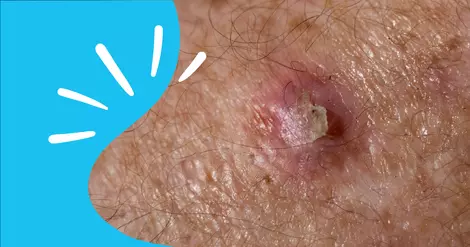
Many BCCs start as a small raised bump, sometimes called a nodule (a firm lump). These bumps often look shiny, pearly, or slightly translucent (see-through). Some may have tiny blood vessels visible on the surface.
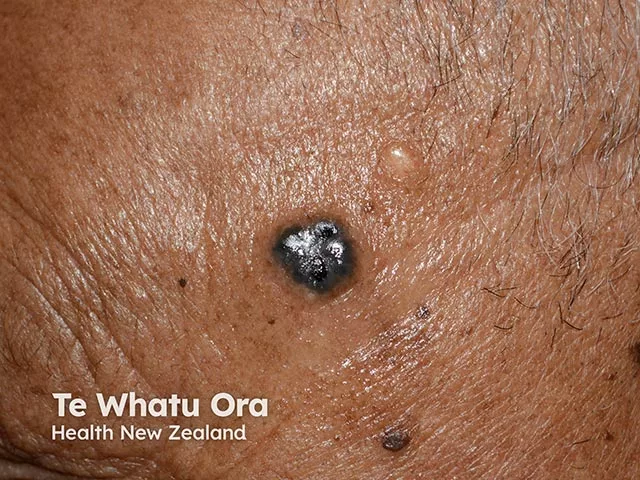
BCC bumps or nodules most often develop on sun-exposed areas such as the face, scalp, ears, and neck. Depending on their color and appearance, they can sometimes be mistaken for moles or warts. These bumps may also bleed easily, then crust or scab over.
Flat Patches
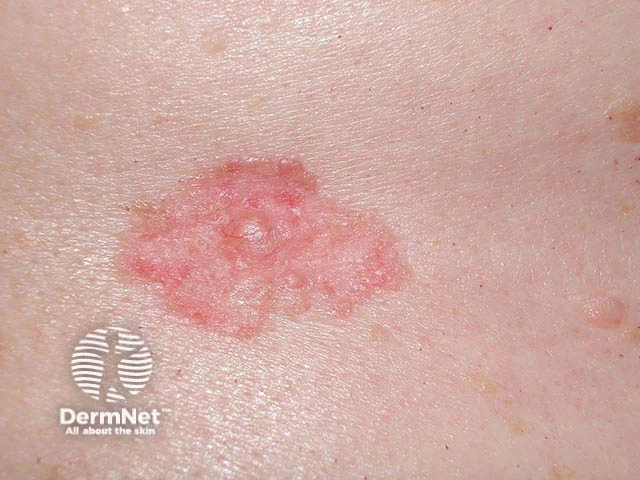
Some BCCs are flat instead of raised. These may appear as a reddish patch that’s slightly scaly or rough. Over time, the patch may slowly enlarge, and it is often found on the chest, back, shoulders, arms, or legs.
Because these patches can sometimes be irritated or mildly itchy, they may be mistaken for dry skin, a rash, or skin conditions that cause scaly patches, such as psoriasis.
Open Sores
A common warning sign of BCC is an open sore that doesn’t heal within a few weeks or a sore that heals and then comes back.
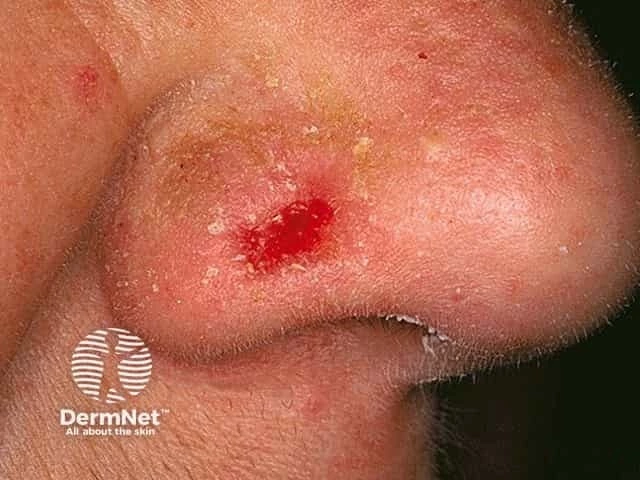
BCC sores may ooze, bleed, or crust over. Because they can resemble a pimple, a scratch, or another minor skin injury, they may be easy to overlook.
Spots With a Rolled Edge
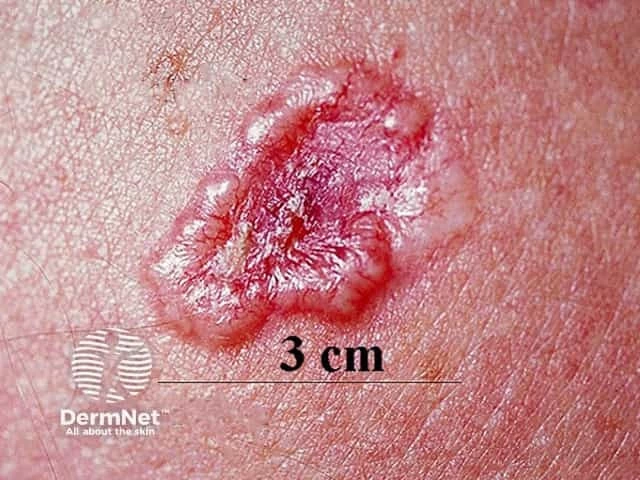
Another common feature of BCC skin changes is a raised or rounded border around the spot. Doctors may call this a rolled edge or rolled border because the edges of the spot appear raised compared with the center. This can give the lesion a ringlike or craterlike appearance.
Scarlike Areas
Some BCCs look like a scar, even if you’ve never injured your skin in that area. These spots may appear white, yellow, waxy, shiny, or slightly thickened.
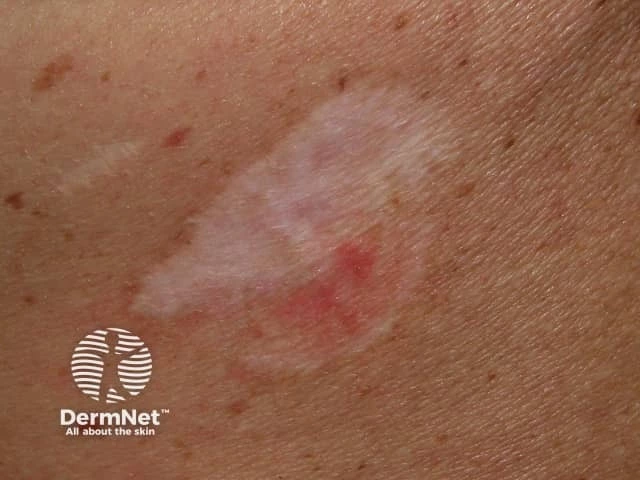
Scarlike BCCs can be harder to recognize because their borders are often not clearly defined. This appearance is most often associated with morpheaform BCC, a less common subtype that can grow deeper into surrounding tissue than some other forms of BCC.
Small Details That Set BCC Apart
Looking closely at BCC skin changes, many of them have specific surface features, including:
- Tiny blood vessels on the surface of the skin (these may be easier to see on lighter skin tones)
- A shiny, glossy, pearly, or translucent appearance
- A scaly or rough texture
- Crusting or scabbing
- An open area or break in the skin’s surface
- A rolled edge that creates a dip in the center
- In some cases, a cystlike (fluid-filled) appearance
These small details may make it a little easier to distinguish BCC from harmless spots, lumps, and bumps.
How Big Can Basal Cell Carcinoma Get?
BCC can start very small, sometimes measuring just a few millimeters across. It often grows rather slowly over months or even years. Without skin cancer treatment, a BCC can continue to grow and may damage nearby skin and deeper tissues.
Where on Your Body Can Basal Cell Carcinoma Develop?
BCC can appear anywhere on the body, but it’s most commonly found in areas that are exposed to the sun a lot. This can include your:
- Ears
- Face, especially on the nose
- Scalp
- Neck
- Shoulders
- Chest
- Back
BCC can also develop on the arms and hands, although it is less common there than on the head and neck.
BCC rarely develops on the palms of the hands or the soles of the feet. In rare cases, it can occur in areas that receive little or no sun exposure, including the genital or anal area.
Why Basal Cell Carcinoma Is Easy To Miss
It can sometimes be tricky to spot BCC because it grows slowly and doesn’t always cause pain or other symptoms. BCC may be mistaken for common skin conditions, including:
- Pimples or cystic acne
- Moles
- Warts
- Rashes
- Patches of dry skin
- Scars
- Skin conditions such as psoriasis
Because BCC can resemble many everyday skin concerns, it’s important to pay attention to spots that are new, changing, or not healing as expected.
When To Check a Suspicious Spot
If you notice any changes on your skin, consider seeing a dermatologist, especially if you develop a new growth or spot. It’s also a good idea to have a healthcare provider evaluate:
- A sore that doesn’t heal
- A spot that bleeds easily
- A patch that keeps coming back
- A growth that continues to get bigger over time
If you’re unsure whether a skin change could be BCC, having it checked by a dermatologist can help provide answers. When found early, BCC is highly treatable.
Spotting BCC Early
Remember, basal cell carcinoma can look very different from person to person. It may appear as a shiny bump, a red patch, an open sore, or a scarlike area. Depending on your skin tone, it can appear pink, red, brown, black, blue, or another darker shade.
Because BCC often grows slowly and doesn’t always hurt, it can be easy to mistake it for a harmless skin problem. But catching it early is important. The sooner BCC is detected, the more effective treatment tends to be.
Make it a habit to check your skin regularly, especially in areas that get a lot of sun exposure. Look for anything that’s new, changing, or not healing the way it should. When in doubt, it’s always best to have a dermatologist take a look.
Join the Conversation
On MySkinCancerTeam, people share their experiences with skin cancer, get advice, and find support from others who understand.
What prompted you to get a skin change checked out? Let others know in the comments below.
- Basal Cell Carcinoma Warning Signs & Pictures — Skin Cancer Foundation
- Is It a Pimple or Maybe Basal Cell Carcinoma? — Melanoma Canada
- Basal Cell Carcinoma — Mayo Clinic
- Basal Cell Carcinoma: From Symptoms to Treatments — American Academy of Dermatology
- Basal Cell Carcinoma in Skin of Colour — DermNet
- Basal Cell Carcinoma — DermNet
- What Does Basal Cell Carcinoma Look Like? — DermNet
Do I have to have surgery or can I try chemo cream first
Related
- What are the risk factors for nonmelanoma skin cancer? See answer
- What does squamous cell carcinoma look like? See answer
- How does immunotherapy for skin cancer work? See answer
- Is squamous cell carcinoma deadly? See answer




 Your Privacy Choices

What happened
To squamous cell discussion