

 Join
Join
What Causes Nonmelanoma Skin Cancer? Age, UV Radiation, and 6 Other Risk Factors


Key Takeaways
- Nonmelanoma skin cancer is a term used to describe types of skin cancer other than melanoma, most commonly basal cell carcinoma and squamous cell carcinoma, which are caused by DNA mutations in skin cells. View all takeaways
Sign up for free to view the full article summary.
Continue with Email“Nonmelanoma skin cancer” is an umbrella term doctors use to describe different types of skin cancer aside from melanoma, most commonly referring to basal cell carcinoma (BCC) and squamous cell carcinoma (SCC). These cancers are caused by mutations or changes in the DNA of skin cells located in the epidermis (the outer layer of skin).
Many people are aware of how exposure to the sun and its ultraviolet (UV) radiation can increase the risk of nonmelanoma skin cancer. But other risk factors, such as age, skin tone, and genetics, are often less well known. In this article we discuss eight environmental and genetic (inherited) factors that can influence your risk of developing nonmelanoma skin cancer.
What Causes Nonmelanoma Skin Cancer?
Mutations that occur in the DNA of skin cells cause nonmelanoma skin cancer. Your DNA gives your cells direction as to how they should behave. Normally, these instructions tell skin cells to grow, divide, and die at a balanced pace.
But skin cells, like basal and squamous cells, can become cancerous if their DNA is damaged. Cells with DNA damage grow and divide too fast and don’t die when they should. This leads to abnormal skin cells piling up into tumors.
Here are the eight risk factors most commonly linked to these types of skin cancer.
UV Radiation Exposure
Almost all cases of nonmelanoma skin cancer are due to sun exposure. Specifically, 90 percent of these cancers can be linked back to UV radiation. Sunlight contains two kinds of ultraviolet light — often referred to as UV light — both of which can damage your skin and potentially lead to skin cancer.
Most UV light from the sun comes in the form of UVA light, which damages cells in the deeper layers of your skin. Although UVA light can give you a quick tan, these tans fade quickly and don’t provide future sun protection. Skin damage from UVA light can also make your skin look older.
UVB light from the sun damages skin cells in the epidermis. UVB light exposure can lead to slow-developing tans that help protect your skin from future sun damage. But this type of UV light can also cause sunburn, making the skin look red and feel irritated.
Researchers believe that skin cancers are more likely caused by UVB rays.
Tanning Beds and UV Exposure
Using indoor tanning beds — which emit UV light — also counts as exposure to UV radiation. The level of UV radiation you can get from a tanning bed varies by model.
Newer tanning beds can only release UV radiation equal to or less than that emitted by the sun midday at the equator. Older models may give off more.
Use of tanning beds has been reported to raise the risk of developing squamous cell carcinoma by 67 percent. This increased risk is why several countries, such as Germany, have banned the use of tanning beds or sun lamps for people under age 18. The fast tans many people get from tanning beds are from UVA rays.
If you’re thinking of using a tanning bed to prevent sun damage during an upcoming vacation, remember: Your tanning bed tan won’t offer future sun protection and often fades quickly.
Age
Older adults, particularly those 65 or older, have an increased risk of nonmelanoma skin cancer. The two most common types — squamous cell carcinoma and basal cell carcinoma — are most often diagnosed in people older than 50.
So why does getting older increase your risk of skin cancer? In general, older people have spent more total time in the sun during their lives. The more time you spend in the sun, the more UV radiation you’re exposed to, which can damage your skin.
Sun damage accumulates over the course of your lifetime.
Skin Tone
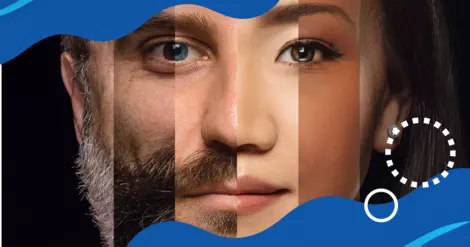
Skin tone can be classified into six skin types.
Skin Types 1 and 2
People who have skin types 1 and 2 are fair- or light-skinned and often have freckles, blond or red hair, and green or blue eyes. They’re also more likely to get a sunburn and less likely to tan. These skin types are generally the most sensitive to sunlight, which is why they have a higher risk of developing nonmelanoma skin cancer.
Skin Type 3
People who have this skin type are light-skinned and may rarely have freckles. They often have blond or brown hair. Those with skin type 3 may tan more easily than skin types 1 and 2 but can still burn, although not as quickly.
Skin Types 4, 5, and 6
Darker skin tones aren’t as sensitive to the sun, which means they take longer to sunburn. This is because darker skin contains more melanin, which is a natural sun protectant. People with darker skin are less likely to develop nonmelanoma skin cancer than lighter-skinned people.
Personal and Family History of Skin Cancer
If you’ve already had skin cancer, you’re more likely to be diagnosed with it again. You may also have a higher risk of skin cancer if someone in your family has had it.
The risk of developing skin cancer again can vary among those previously diagnosed and treated for skin cancer. The location of your cancer, time of diagnosis, type of treatment you received, and your skin type can all influence your future risk of skin cancer.
The type of skin cancer you had before can greatly impact your risk of developing it again.
- If you’ve had BCC before, you have a 29 percent chance of getting BCC again, a 4 percent chance of getting SCC, and less than a 1 percent chance of getting melanoma.
- If you’ve had SCC before, you have a 13 percent chance of getting SCC again, a 16 percent chance of getting BCC, and less than a 1 percent chance of getting melanoma.
Geographic Location
The amount of UV radiation you get from the sun can vary depending on where you are in the world.
If you’re in a country close to the equator — where the sun is high in the sky — UV rays will be strong and can damage skin more easily. Likewise, if you’re in a part of the world that’s near a hole in the ozone, such as by the Antarctic, the Earth’s atmosphere doesn’t protect you as well from the sun’s powerful rays. You’re also likely to be exposed to higher levels of UV radiation in the mountains or near reflective matter, such as bodies of water, snow, and sand.
Applying sunscreen and limiting sun exposure are important everywhere. But in places like the mountains and near the equator and poles, it’s essential to be vigilant about sun protection due to the higher risk of skin cancer.
Other Health Conditions
Having certain genetic conditions can increase your risk of skin cancer. Inherited conditions that can raise your risk of developing nonmelanoma skin cancer include:
- Albinism — A condition in which the skin contains no melanin
- Gorlin syndrome (also called nevoid-basal cell carcinoma syndrome) — A rare condition that causes basal cell tumors
- Xeroderma pigmentosum — A rare condition in which skin cells aren’t able to repair themselves after sun damage
Certain skin conditions can also increase your risk of getting nonmelanoma skin cancer.
Actinic keratosis, also called solar keratosis, is a condition in which skin in areas chronically exposed to the sun (such as the hands, face, or top of the head) becomes scaly, discolored, or rough due to sun damage. The skin condition is more likely to affect people with fair skin. Having actinic keratosis increases your risk of developing SCC.
Having conditions related to human papillomavirus (HPV), such as cervical cancer, genital warts, and Bowen’s disease, can also increase your risk of skin cancer.
Receiving certain treatments for eczema and psoriasis, such as UV light therapy, can also raise your risk of nonmelanoma skin cancer.
Medical History
Your immune system is your body’s natural defense against sickness and injury. It also helps you fight off cancer cells. People living with a weakened immune system are more likely to develop skin cancer.
If you have a history of organ transplant, inflammatory disease, AIDS, or human immunodeficiency virus (HIV), these can weaken your immune system in its fight against cancer cells. Taking medications for these conditions can also weaken your immune system.
Previous treatment with radiation therapy, such as for certain types of cancer or skin conditions like acne, increases your risk of developing nonmelanoma skin cancer in the treated area. Radiation therapy is no longer used for acne treatment.
Occupation
Spending more time outside means more UV radiation exposure. People who work outside are more likely to be diagnosed with nonmelanoma skin cancer. You might also have a higher risk of developing these skin cancers if your job exposes you to other types of radiation.
Working with certain chemicals may also increase your odds of developing nonmelanoma skin cancer. Specifically, exposure to soot, creosote, coal tar, arsenic, shale, motor oil, or other petroleum products is thought to increase the risk of skin cancer.
Join the Conversation
On MySkinCancerTeam, people share their experiences with kidney cancer, get advice, and find support from others who understand.
Which of these nonmelanoma skin cancer risk factors comes as a surprise? Let others know in the comments below.
- Nonmelanoma Skin Cancer — Mayo Clinic
- Nonmelanoma Skin Cancer — Cleveland Clinic
- Squamous Cell Carcinoma Risk Factors — Skin Cancer Foundation
- Non-Melanoma Skin Cancer: Learn More — What Increases Your Risk of Non-Melanoma Skin Cancer? — InformedHealth.org
- Squamous Cell Carcinoma — Cleveland Clinic
- Basal Cell Carcinoma — Cleveland Clinic
- Risks and Causes of Non Melanoma Skin Cancer — Cancer Research UK
- Immune System — Cleveland Clinic
Related
- What does actinic keratosis look like? See answer
- What are the main types of nonmelanoma skin cancer? See answer
- What can I expect from Mohs surgery for skin cancer? See answer
- What are the treatments for squamous cell carcinoma at different stages? See answer




 Your Privacy Choices

When I was a youth I thought sunburn was just an annoyance of my skin type. Now I know it was a critical part of the cause of my BCC and SCC. I regret to say I never gave my episodes of critical sunburn much credence. Also, we didn’t have sunscreen products in my early years.