

 Join
Join
Does Skin Cancer Itch?


Key Takeaways
- Some skin cancers, especially common types like basal cell carcinoma and squamous cell carcinoma, can cause itching, though an itch alone does not mean someone has skin cancer. View all takeaways
Sign up for free to view the full article summary.
Continue with EmailDo you have an itchy spot that just won’t go away? An itch that won’t quit can be easy to blame on dry skin, eczema, or a bugbite. But could it be more serious? Some skin cancers can itch, especially nonmelanoma skin cancers such as basal cell carcinoma (BCC) and squamous cell carcinoma (SCC).
Itching alone doesn’t mean you have skin cancer. Many common skin problems can cause itching. Still, a spot that keeps itching and also changes, bleeds, crusts, grows, or doesn’t heal should be checked by a dermatologist.
In this article, we’ll cover why skin cancer may itch, what an itchy skin cancer spot may look like, what else may be causing your itch, and when to see a doctor.
Does Skin Cancer Itch?
Yes, skin cancer can itch, but it doesn’t always. Skin cancer often causes no symptoms at first. When symptoms do happen, they may include:
- Itching
- Tenderness
- Pain
- Bleeding
- Crusting
- A sore that won’t heal
Itching is more common in nonmelanoma skin cancers. These include BCC and SCC, the two most common types of skin cancer. A large study found itching in 46.6 percent of SCC spots and 31.9 percent of BCC spots.
Why Does Skin Cancer Itch?
Itching is a signal from the skin’s nerves. Your skin helps you feel touch, heat, cold, pain, and itching. The dermis, or middle layer of skin, contains many sensory nerve fibers. Skin cancer may itch for a few reasons.
Inflammation Can Trigger Itch
Your immune system may react to abnormal skin cells. This reaction can cause inflammation, which means immune cells and chemicals gather in the area.
In the previously mentioned study, itch intensity was linked with the amount of inflammation in the skin cancer lesion. More inflammation corresponded to a greater sensation of itchiness.
Nerves Near the Lesion May Be Irritated
If a cancerous spot grows near nerves, it may irritate them. This could lead to sensations such as itching, tingling, burning, numbness, or pain.
The inflammatory response caused by the presence of the cancer may also irritate the nerves. The previously mentioned study also linked itching with the presence of eosinophils, a type of white blood cell important to your immune system. Eosinophils can release chemicals as part of the immune response. These chemicals may irritate nearby nerves and contribute to itching.
Growth and Tissue Changes May Affect the Skin
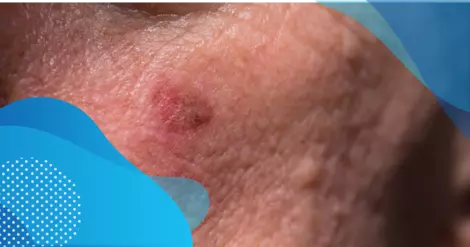
Cancer cells can change the normal structure of the skin as they grow. The skin may become rough, scaly, raised, crusted, or open.
Some lesions break open and heal over, then return. Others may bleed after shaving, rubbing, or getting caught on clothing. These tissue changes may make the area feel irritated or itchy.
Which Types of Skin Cancer Are Most Likely To Itch?
Itching can happen with several skin cancer types, but it seems most common with SCC, followed by BCC. Melanoma can itch, but it is a less common symptom.
Squamous Cell Carcinoma
SCC is a common type of skin cancer. It often appears on skin that gets a lot of sun, such as the face, scalp, neck, arms, hands, and lower legs. It can also appear in scars, long-lasting sores, the mouth, around or under a nail, the anus, or the genitals.
- A rough, scaly patch
- A firm, dome-shaped growth
- A sore with raised skin around it
- A sore that heals and comes back
- A wart-like or horn-like growth
- A crusty spot that bleeds
SCC can itch before a visible spot appears, or when it is in its precancerous form called an actinic keratosis. Itching may happen on or around the growth.
Basal Cell Carcinoma
BCC is the most common type of skin cancer. It also tends to develop on sun-exposed areas. It often grows slowly and rarely spreads, but it can grow deeper into nearby tissue if it’s not treated.
- A firm, round, raised bump
- A shiny pink, red, brown, black, or skin-colored bump
- A scaly spot or patch
- A sore that doesn’t heal or heals and returns
- A scar-like mark
- A cluster of shiny bumps
- A raised reddish patch that may itch
BCC often appears on the head, neck, ears, nose, eyelids, or scalp. It can also develop on other skin areas.
Is It Skin Cancer or Something Else?
Most itchy skin is not skin cancer. Dry skin, eczema, allergic reactions, and bugbites are much more common causes. Here are some clues that can help you tell the difference.
Dry Skin
Dry skin often affects a wider area rather than one single spot. It may feel tight, rough, flaky, or cracked. Dry skin may get worse in cold weather, after hot showers, or after using harsh soaps.
Moisturizer and gentle skin care often help. A single itchy spot that doesn’t improve, keeps growing, or bleeds should be checked.
Eczema
Eczema is a group of conditions that cause inflamed skin. Atopic dermatitis, the most common type of eczema, often causes intense itching, dry, scaly skin, a rash, or small bumps.
Eczema often comes and goes. It may affect areas such as the hands, wrists, neck, inside the elbows, or behind the knees. Skin cancer is more likely to show up as one spot that changes, grows, crusts, bleeds, or doesn’t heal.
Bugbites
Bugbites often appear suddenly. They may be swollen, red, or inflamed, and itchy for a day or two.
A bite-like bump that keeps growing, lasts for weeks, breaks open, bleeds, or heals and returns may not be a bugbite.
When Should You See a Dermatologist?
Make an appointment with a dermatologist if you have an itchy spot that:
- Doesn’t heal after a few weeks
- Bleeds, crusts, oozes, or breaks open
- Heals and then comes back
- Grows or changes shape, color, or texture
- Looks pearly, shiny, scaly, wart-like, or sore-like
- Feels painful, tender, numb, or tingly
- Looks different from your other spots
The American Cancer Society recommends asking a doctor about new, expanding, or changing growths, sores that don’t heal, rough or scaly patches, wart-like growths, or moles that change in size, shape, or color.
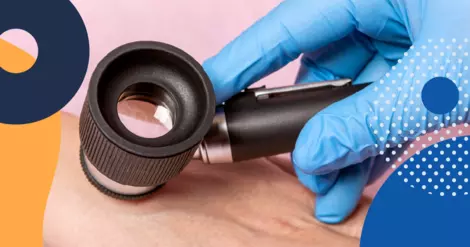
A dermatologist may do a skin exam. If a spot could be skin cancer, they may perform a skin biopsy. During a biopsy, a small sample is removed and checked under a microscope. A biopsy is the only way to confirm certain skin cancer diagnoses.
What Can You Do While Waiting for an Appointment?
Try not to scratch the spot. Scratching can irritate the skin and may cause bleeding or infection.
You can also:
- Take a clear photo of the spot in good light.
- Write down when you first noticed the itch.
- Note any changes in size, color, bleeding, crusting, or pain.
- Avoid picking at scabs or rough areas.
- Use a gentle, fragrance-free moisturizer on dry surrounding skin.
Don’t use strong over-the-counter creams on a suspicious spot unless your doctor recommends them. Some products can further irritate the skin or make it harder to see what’s going on.
Join the Conversation
On MySkinCancerTeam, people share their experiences with skin cancer, get advice, and find support from others who understand.
Have you noticed itching around a skin cancer spot? Let others know in the comments below.
- Association of Pain and Itch With Depth of Invasion and Inflammatory Cell Constitution in Skin Cancer — JAMA Dermatology
- Basal and Squamous Cell Skin Cancer Symptoms — American Cancer Society
- Key Statistics for Basal and Squamous Cell Skin Cancers — American Cancer Society
- In Brief: How Does Skin Work? — InformedHealth.org
- Inflammatory Responses and Inflammation-Associated Diseases in Organs — Oncotarget
- Eosinophils — Cleveland Clinic
- Does Skin Cancer Itch? What You Need To Know — Pinnacle Dermatology
- Basal Cell Carcinoma: From Symptoms to Treatments — American Academy of Dermatology
- Does Melanoma Itch? — Better Skin Dermatology
- Itchy Skin (Pruritus) — Mayo Clinic
- Dry Skin — Cleveland Clinic
- Eczema Types: Atopic Dermatitis Symptoms — American Academy of Dermatology
- Insect Bites and Stings: First Aid — Mayo Clinic
- Squamous Cell Carcinoma: From Symptoms to Treatment — American Academy of Dermatology
Related
- Is squamous cell carcinoma deadly? See answer
- What helps with skin cancer treatment side effects? See answer
- What's the difference between basal cell and squamous cell carcinoma? See answer
- How can I cope with the emotional side of a skin cancer diagnosis? See answer




 Your Privacy Choices

I have had many basal and squamous cell cancers .Two years ago I found out I had squamous cell cancer of face,head and neck.I was offered surgery and refused.I took Libtayo infusions for about a year and had reaction.