

 Join
Join
What Does Squamous Cell Carcinoma Look Like?


Key Takeaways
- Squamous cell carcinoma (SCC) is a type of skin cancer that can look different from person to person, appearing as a wart, an open sore, an age spot, or a scaly patch. View all takeaways
Sign up for free to view the full article summary.
Continue with EmailIt may look like a wart, an open sore that won’t heal, an age spot, or a discolored scaly patch. Because squamous cell carcinoma (SCC) can look different from person to person, it’s important to know what signs to watch for.
SCC can grow quickly, so it’s vital to get a dermatologist’s opinion as soon as possible if you notice any skin changes that might be cancerous. Here’s a guide to how symptoms of squamous cell carcinoma skin cancer may appear.
Where Does Squamous Cell Carcinoma Develop?
Squamous cell carcinoma can develop anywhere on your skin. Most of the time, it grows on parts of the body with sun exposure. This is particularly true in people with lighter skin tones.
Common areas include the scalp, face, neck, shoulders, ears, and lips, as well as the forearms and backs of the hands.
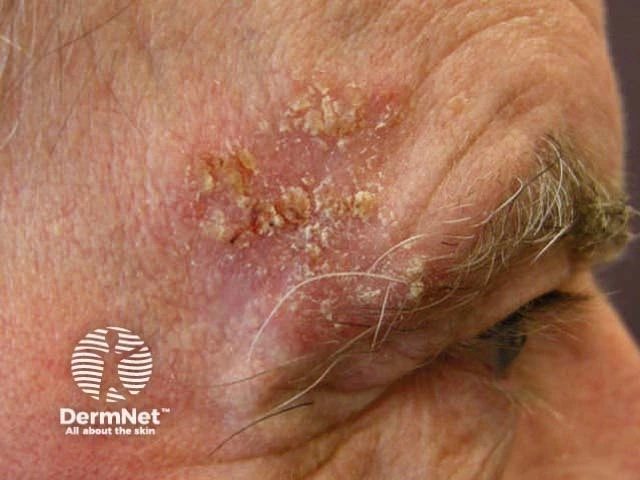
Squamous cell carcinoma commonly appears on skin that is frequently exposed to the sun, such as the face, neck, forearms, and backs of the hands. (CC BY-NC-ND 4.0/DermNet/)
People with darker skin tones may be more likely to experience squamous cell carcinoma in locations that haven’t been exposed to the sun’s rays. These can include inside the mouth, on the bottoms of the feet, or even on the genitals.
If you have scars or other healed sites of previous skin injury, squamous cell carcinoma can develop inside these. When this happens, the skin around the previous injury usually looks like it’s been damaged by the sun. This skin may be less elastic, appear lighter or darker than the skin around it, and have wrinkles.
Squamous cell carcinoma is most common in areas exposed to the sun. But it can develop anywhere on the body, including in the mouth or the bottoms of the feet.
It’s important to see a doctor about any spots or skin growths that concern you, even if they’re not where skin cancer commonly develops. Your healthcare provider can tell you if any spots need to be tested for cancer.
How Big Are Squamous Cell Carcinoma Tumors?
Squamous cell carcinoma tumors can have a wide range of sizes. Some are very small, just a few millimeters across. Larger ones can be several centimeters in diameter.
Squamous cell carcinoma can grow fast. You may see changes over a few months or even a few weeks. If you’re checking your skin head to toe every month, as some dermatologists recommend, you’re more likely to notice changes in a squamous cell carcinoma lesion.
What Shape Is Squamous Cell Carcinoma?
Squamous cell carcinoma is often roughly circular in shape, though the spots aren’t always round. Some look more irregular, like a patch with uneven borders.

Sometimes, the shape of a squamous cell carcinoma may be influenced by its location on the body. If it’s on a fingertip, for example, it may not appear round, especially as it grows.

Some squamous cell carcinomas will develop a cutaneous horn. This grows from the middle of the affected area of the skin and forms a thick spike that feels solid when you touch it. It’s made of keratin, which is the same substance that makes up your nails and hair.
Squamous cell carcinomas generally develop within a boundary. Inside the boundary, the skin is affected, while the skin around it seems normal. The boundary may expand as the cancer grows, but it will still have a boundary. If you have multiple areas of squamous cell carcinoma, each one is likely to have its own boundary.
What Color Is Squamous Cell Carcinoma?
Squamous cell carcinomas can vary in color. Some are the same color as the surrounding skin, which can make them harder to spot.
Squamous cell carcinoma can appear red, pink, purple, brown, grey, or even black.
Other instances of squamous cell carcinoma may vary widely in color. They can be red, pink, purple, brown, grey, or even black. Darker colors are more common in people with darker skin, but fair-skinned people can also get darker squamous cell carcinoma spots.
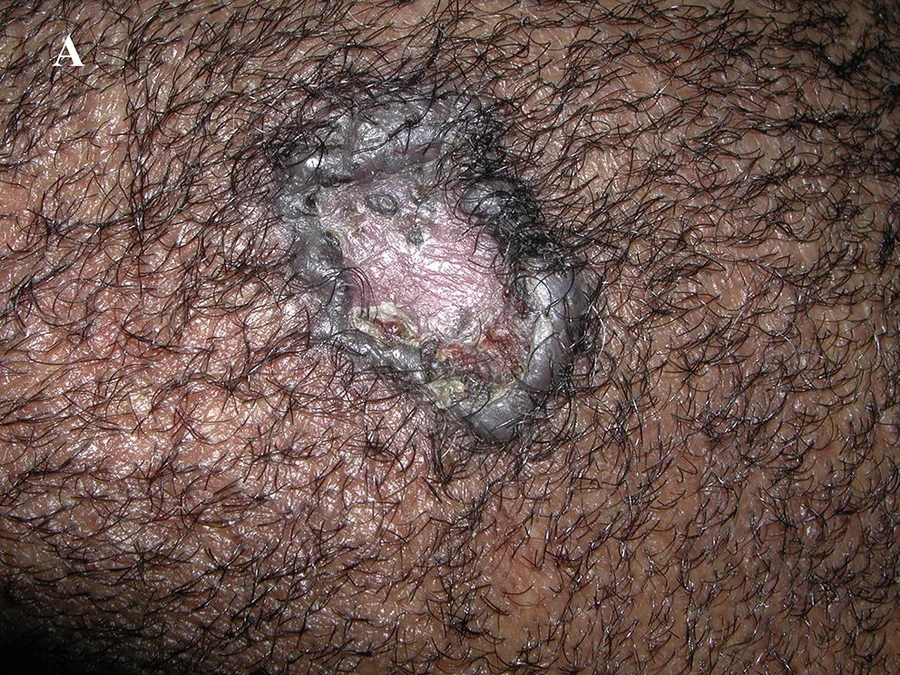
Because squamous cell carcinoma can vary so much in color, it helps to watch for other signs that you may need to see a dermatologist.
What Is the Texture of Squamous Cell Carcinoma?
If a spot is growing fast and has some of the textures noted below, it may be more likely to be SCC. However, you should see your doctor anytime you have concerns about your skin.
Squamous cell carcinoma can have a variety of textures. It may look like:
- A firm, round growth that's raised off the skin and seems to have a dome on top. This may or may not have a crust on top of it and might bleed.
- An open sore or wound that won’t heal. This may also be crusty or bleed, and may have raised skin all the way around it.
- A discolored, scaly patch that may appear as dry skin at first. These may be more common on darker skin.
- A growth that’s raised off the body and may have a dent or depression in the middle. These can be rough and painful and may also crust and bleed.
- A growth that looks like a wart but keeps growing and doesn’t go away.
- A growth that looks like an age spot.
Any spots on your skin that develop suddenly, grow quickly, and have one of these textures warrant seeing a doctor right away. They can perform testing and order treatment for squamous cell skin cancer if it’s diagnosed.
Bleeding for No Reason
Many squamous cell carcinoma spots are particularly prone to bleeding. If you have a spot and you notice that it seems to bleed even when there’s no reason for it to do so, it might be worth getting it checked for squamous cell carcinoma.
Many squamous cell carcinoma spots are particularly prone to bleeding, even without an injury.
Talk to Your Doctor
Any skin lesions should be checked by your doctor right away. This can help you catch squamous cell carcinoma early.
You should also have your doctor check your skin once a year — or however often they tell you to. Dermatologists have tools and expertise that help them catch spots that you might not notice or that are hard for you to see.
If you’ve had any type of skin cancer previously, including basal cell carcinoma, or if you've had a precancerous skin condition like actinic keratosis, it’s particularly important that you follow up with your doctor as they recommend.
Diagnosing squamous cell carcinoma in the early stages is key. With early detection and skin cancer treatment, most people have very good outcomes.
If SCC continues to grow without treatment, it can become invasive. This means that it spreads into nearby tissues. When this happens, it can cause long-term changes to your appearance and, in rare cases, may become life-threatening.
Avoid these kinds of problems by checking your skin, seeing a dermatologist regularly, and getting medical attention if you notice anything unusual. Your skin will thank you!
Join the Conversation
On MySkinCancerTeam, people share their experiences with nonmelanoma skin cancer, get advice, and find support from others who understand.
If you or a loved one was diagnosed with squamous cell carcinoma, what did it look like? Let others know in the comments below.
Related
- What are the treatments for basal cell carcinoma? See answer
- What are common symptoms of skin cancer? See answer
- Is squamous cell carcinoma deadly? See answer
- What's the life expectancy with nonmelanoma skin cancer? See answer







 Your Privacy Choices

My squamous cell was on my nose and I had one dermatologist check it twice. He said it was nothing to worry about but froze it once. After 7 yrs of know in it wasn’t right I saw another dermatologist who identified it as squamous cell and did surgery right away to get rid of it. I’ve had no further problems. Always get a second opinion!!