
 Join
Join
What Is Actinic Keratosis? Can It Turn Into Squamous Cell Carcinoma?


Key Takeaways
- Actinic keratosis (AK) is a common precancerous skin condition that causes rough, scaly patches on the skin and can sometimes develop into squamous cell carcinoma (SCC), the second most common type of skin cancer in the United States. View all takeaways
Sign up for free to view the full article summary.
Continue with EmailActinic keratosis (AK) is a common precancerous skin condition. These rough, scaly patches aren’t cancer, but they can sometimes develop into skin cancer if left untreated.
AK is considered a precursor to squamous cell carcinoma (SCC), the second most common type of skin cancer in the United States. Although most AKs don’t become cancerous, some can progress to SCC. About 1 million people in the U.S. are diagnosed with SCC each year.
In this article, we’ll explain what actinic keratosis is, how it can progress to SCC, and when to talk to a doctor about treatment.
What Causes Actinic Keratosis?
AK is associated with long-term sun exposure, similar to the most common skin cancers. When you spend a lot of time in the sun, the sun’s ultraviolet (UV) rays can damage the DNA of your skin cells.
With enough DNA damage, skin cells can grow abnormally and develop into SCC. SCC can then spread if it’s left untreated.
An estimated 1 percent to 10 percent of actinic keratoses develop into squamous cell carcinoma. This is more likely to happen if AK is unnoticed or untreated.
Around 70 percent of cutaneous SCCs develop from an original AK lesion.
Where Actinic Keratosis Appears
Like some common types of skin cancer, actinic keratoses tend to develop in areas of skin that see a lot of sunlight or are exposed to UV light in tanning beds.
Depending on how much you cover up when you spend time outdoors, AK can develop in the following areas: 
- Forehead
- Scalp
- Face
- Ears
- Back of the arms or hands
- Lower legs
- Back
How Actinic Keratosis Is Diagnosed
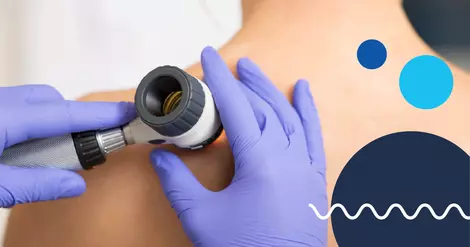
Primary care physicians and dermatologists can usually diagnose AK with a simple skin exam. They ask about your symptoms, look at the lesion, and may examine it with a magnifying tool.
If your dermatologist needs more information, they might use a skin biopsy to take a closer look at your skin cells. A skin biopsy involves collecting a small skin sample that can be examined under a microscope in a laboratory.
Most of the time, a biopsy isn’t needed to accurately identify AK.
Actinic Keratosis Risk Factors
Actinic keratoses are highly common, especially in people who spend a lot of time in the sun without sun protection.
These factors can increase your risk of AK:
- Having a fair complexion
- Getting older
- Having a weakened immune system
- Working a job that requires you to be outside often
- Living near the equator
- Having a history of AK or skin cancer
- Developing frequent sunburns or freckles
When Actinic Keratosis Needs Treatment
Although most actinic keratoses don’t become skin cancer, early treatment is important because it can lower the risk. Always tell your doctor or dermatologist if you notice any unusual skin changes.
Treatment can remove AK, but precancerous changes and unusual skin lesions can come back. Continue seeing your dermatologist once or twice a year so that they can catch changes early and treat them accordingly.
Common Treatments for Actinic Keratosis
Your dermatologist can explain your treatment and removal options. Treating AK can help lower the risk of skin cancer. The best approach depends on factors such as where the AKs are located and how many lesions you have.
Your dermatologist might suggest:
- Cryotherapy — Freezes the lesions with liquid nitrogen
- Chemical peel — Removes the damaged skin using strong chemicals
- Laser therapy — Destroys the damaged skin cells with focused light
- Curettage — Scrapes and burns off damaged skin cells
- Photodynamic therapy — Involves applying a light-sensitive cream, then shining a special light on it
- Prescription topicals — Causes the skin to peel and slough off
- Skin surgery — Removes the damaged cells
 Risk Factors for Actinic Keratosis Turning Into Squamous Cell Carcinoma
Leaving an AK lesion untreated may make it more likely to turn into SCC, but other risk factors can also increase the chance of this happening.
One study found that people with AK were seven times more likely to develop SCC than people without AK. Talk to your doctor about your risk of AK becoming SCC.
History of Skin Cancer
If you’ve had skin cancer, actinic keratoses are more likely to progress into SCC. This is true even if the skin cancer was treated and went away.
Older Age
Getting older can raise the risk of an AK lesion turning into SCC. Research suggests that people aged 59 and older are at the highest risk of their actinic keratoses becoming cancerous.
Immunosuppression
Immunosuppression, or having a weakened immune system, is a notable risk factor for AK turning into SCC.
If you’re being treated with chemotherapy or if you have a condition that weakens your immune system, such as AIDS, your immune system might not work as well as it should.
Research suggests that people who have had organ transplants — including lung, heart, and kidney transplants — are at an especially increased risk of developing SCC from AK. This is because they take medications to reduce immune system activity so their bodies won’t reject the new organ.
The Number of Actinic Keratoses
You have a higher risk of AK turning into SCC if you have more than five AK lesions on your body. One study found that more than 40 percent of people with multiple AK lesions developed SCC or another form of skin cancer during an 11-year follow-up period.
Talk to Your Dermatologist
If you notice any unusual skin changes, ask your dermatologist to check them. Always follow your dermatologist’s advice on treating an AK lesion and monitoring your skin after treatment.
Treatment for AK can sometimes be uncomfortable, but finding and treating it early can lead to better outcomes. If your AK develops into SCC, your dermatologist can recommend SCC treatment.
Your dermatologist may have a few recommendations for both skin cancer prevention and preventing actinic keratoses. You can manage your risk for AK by taking these steps:
- Wearing lip balm and sunscreen with an SPF of 30 or higher
- Wearing full-coverage clothing and UV-protective sunglasses
- Avoiding tanning booths and tanning beds altogether
- Limiting sun exposure from about 10 a.m. to 2 p.m.
- Familiarizing yourself with your skin and tracking skin changes
Why Early Skin Checks Matter
Protecting your skin can lower your risk of AK and skin cancer. If you notice a rough, scaly patch or another skin change that doesn’t go away, ask your dermatologist to check it. Finding and treating AK early can help prevent it from becoming more serious.
Join the Conversation
On MySkinCancerTeam, people share their experiences with skin cancer, get advice, and find support from others who understand.
What skin changes do you look for that tell you when to see a dermatologist? Let others know in the comments below.
- What Is an Actinic Keratosis? Dermatologist Explains Common Precancerous Skin Lesions — The University of Texas MD Anderson Cancer Center
- Squamous Cell Carcinoma of the Skin — The University of Texas MD Anderson Cancer Center
- Actinic Keratosis — Cleveland Clinic
- Guidelines of Care for the Management of Actinic Keratosis — Journal of the American Academy of Dermatology
- Actinic Keratosis FAQs — American Society for Mohs Surgery
- From Actinic Keratosis to Cutaneous Squamous Cell Carcinoma: The Key Pathogenesis and Treatments — Frontiers in Immunology
- Actinic Keratosis Diagnosis and Increased Risk of Developing Skin Cancer: A 10-Year Cohort Study of 17,651 Patients in Sweden — Acta Dermato Venereologica
- Immunosuppressants — Cleveland Clinic
Related
- What is Bowen disease (squamous cell carcinoma in situ)? See answer
- How can I tell the difference between a mole and skin cancer? See answer
- What are the key facts I need to know about skin cancer? See answer
- What are the stages of basal cell carcinoma? See answer





 Your Privacy Choices