

 Join
Join
Squamous Cell Carcinoma on the Scalp: Symptoms and More


Key Takeaways
- Up to 70 percent of squamous cell carcinomas start on the head or neck, making the scalp a common spot for this type of skin cancer, especially for those with little or no hair. View all takeaways
Sign up for free to view the full article summary.
Continue with EmailUp to 70 percent of squamous cell carcinomas (SCCs) start on the head or neck, and sun exposure is one of the biggest risk factors. For that reason, it’s no wonder SCC often shows up on the scalp, especially in bald people or those with thinning hair. However, for individuals with a full head of hair, scalp SCC can be harder to notice.
Read on to learn about the symptoms, what to look for, and what to expect if you’re diagnosed with SCC of the scalp.
What Does Scalp SCC Look and Feel Like?
At first, scalp SCC can seem like a wound that won’t heal. It tends to grow quickly and may look pinkish or red. SCC can also be brown, black, or the same color as your skin.
Sometimes there’s a “plug” in the center that weeps and crusts, but not always. The borders tend to be poorly defined (irregular borders). Dermatologists have also described SCC as looking like a horn, wart, open sore, or scar that keeps changing.
How Does It Feel?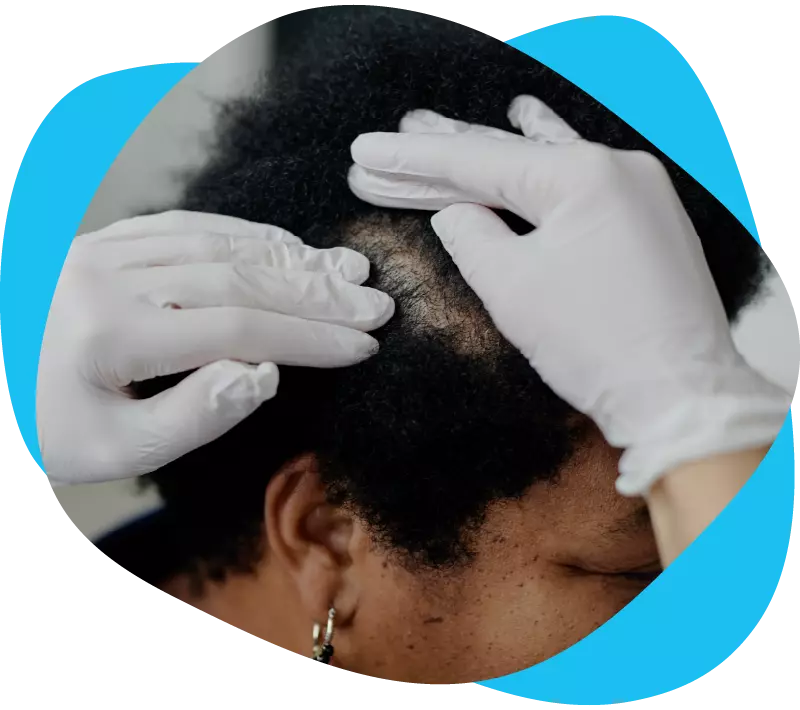
In addition, some people experience symptoms like:
- Burning
- Itching
- Numbness
- Pain
- Stinging
- Tenderness
Ultimately, there’s a wide range of how scalp SCC can look and feel for different people. That’s why it’s always best to tell your doctor about any areas of skin that aren’t the same as the surrounding skin.
Why Scalp SCC Is Often Missed
Early detection and treatment are essential for scalp SCC. Hopefully, by finding skin cancer early, your dermatologist can remove it before it has a chance to spread.
Unfortunately, the early signs of scalp changes often go unnoticed. Even if you’re careful about checking your skin for signs of cancer, it’s impossible to see parts of your scalp without help from someone else or a mirror.
You may not be able to see areas of discoloration on your scalp. You may also dismiss a nonhealing wound as a scab or scalp irritation. If SCC is a scaly patch or crusty area, it may seem like just dandruff or dry skin.
How To Protect Yourself
If you have hair, you’ll need to part it into different sections to fully check your scalp. Ask a friend or partner to help you see areas on top or in the back. Keeping up with regular dermatology appointments can help ensure that tricky areas like the scalp don’t go unchecked.
Aside from looking at your scalp, you should also feel it. Scalp SCC may cause a raised bump, sore, or firm nodule that you can feel by running your hands over your head.
In addition, be sure to wear a wide-brimmed hat and keep your head out of direct sunlight to reduce your risk of scalp SCC.
How Is Scalp SCC Treated?
Surgery is usually the first step to treat SCC on the scalp. The specific type of surgery depends on how risky the cancer is.
Excision
If your SCC hasn’t grown into muscle or bone and is considered low risk for spreading or coming back, doctors may use excision to treat it. This involves cutting the cancerous tissue and a margin (healthy tissue around the cancer) out of the skin.
Mohs Surgery
When available, high-risk SCC is treated with Mohs surgery. It’s a specialized procedure that’s done in stages.
After removing the top layer of cancer cells, the surgeon examines the removed tissue in real time to see if the edges and undersides are cancerous. Then, the surgeon continues removing more tissue as needed to ensure the area left is completely cancer-free.
Mohs surgery is highly effective at removing all cancer cells while preserving healthy tissue. In general, the cure rate for Mohs surgery can be as high as 99 percent. It also leaves minimal scarring.
Surgeons perform Mohs surgery in a single outpatient visit. They use local anesthesia and do lab work while you’re still on site. These factors help make Mohs surgery a cost-effective treatment option.
Surgery for Large Tumors
Mohs surgery isn’t a good option for large scalp tumors that need to be treated in an operating room, or those that involve the nerves or lymph nodes. Some tumors require at least 5 millimeters of normal tissue, if not more, to be removed surrounding the cancer cells. In some cases, a lymph node biopsy needs to be performed to check to see if the cancer has spread.
Other Skin Cancer Treatment Options
Your healthcare provider may also give you a topical medication that you apply to your skin to treat SCC. Other times, they’ll recommend radiation therapy or cryotherapy (freezing the mark off your skin). These alternative treatments can be helpful for people who can’t have surgery.
Chemotherapy may also be part of your treatment plan if the SCC involves the lymph nodes and is considered high risk.
If your oncology team thinks there’s a likely chance of cancer coming back, they may discuss putting you on immunotherapy. Immunotherapy is a medication that works with your immune system to help prevent skin cancer from returning.

What Can You Expect?
If SCC is only on your scalp and you get it surgically removed, the chance you’ll be free from disease five years later is at least 91 percent. Overall, the chance of dying from SCC is 2 percent to 3 percent.
However, there are some added risks with scalp squamous cell carcinoma. SCC in this area is more likely to recur (come back) and more likely to spread (metastasize).
Studies suggest the risk of recurrence is between 6 percent and 10 percent. There’s a 7 percent to 9 percent chance of metastasis (spread) to the lymph nodes.
Preventing Surgical Complications
The scalp has a lot of blood vessels. This makes it more likely to bleed during surgery. Your surgeon will need to take special care to control bleeding for SCC surgery on the scalp, and you will need to monitor the area for any bleeding during the healing process.
Additionally, if you have hair on your head, special care must be taken before and after surgery to reduce infection risk and a foreign body reaction. Hair within at least 1 centimeter around the area being cut must be removed.
After surgery, cleansing the skin regularly can reduce the risk of infection. The area will need to stay clean and protected until it’s had enough time to heal.
Staying Healthy After Treatment
Once an SCC skin growth is treated, there’s a good chance it won’t come back. But that’s not to say you should disregard sun protection and other healthy habits.
Basal cell carcinoma (BCC) is the most common type of skin cancer. It shares many of the same risk factors as SCC. If you have a history of skin cancer, fair skin, or past exposure to ultraviolet light (from the sun or tanning beds), your risk is higher. In addition, everyone’s risk of skin cancer goes up with age.
Wear protective clothing, sunscreen on sun-exposed areas, and always follow up with your dermatologist about any warning signs. Regular skin checks can help find areas of skin cancer that you might not notice at home. Be careful not to miss out on your scheduled skin exams.
Join the Conversation
On MySkinCancerTeam, people share their experiences with skin cancer, get advice, and find support from others who understand.
Have you been diagnosed with squamous cell skin cancer of the head and neck? Let others know in the comments below.
- Management of Cutaneous Squamous Cell Carcinoma of the Scalp: The Role of Imaging and Therapeutic Approaches — Cancers
- Why Skin Cancer on the Head & Scalp Is Often Diagnosed Late — Dr. Arif Aslam
- Squamous Cell Carcinoma: From Symptoms to Treatments — American Academy of Dermatology
- Mohs Surgery — Skin Cancer Foundation
- Squamous Cell Skin Cancer of the Head and Neck — Johns Hopkins Medicine
Related
- What's the life expectancy with nonmelanoma skin cancer? See answer
- What can I expect from radiation therapy for skin cancer? See answer
- What complications can come from skin cancer? See answer
- How does skin cancer progress over time? See answer






 Your Privacy Choices

If you have skin cancer they need to check you for cancer else where