
 Join
Join
Electrodesiccation and Curettage: What To Know for Skin Cancer Treatment


Key Takeaways
- Electrodesiccation and curettage, also called ED&C, is a procedure that can be used to treat certain types of basal cell carcinoma and squamous cell carcinoma skin cancers that have not spread beyond the top layer of skin. View all takeaways
Sign up for free to view the full article summary.
Continue with EmailElectrodesiccation and curettage, or ED&C, is one form of treatment for some basal cell carcinoma and squamous cell carcinoma cases. It’s not the most common treatment option, but there are some circumstances where your dermatologist might recommend it.
If your skin cancer care team is talking about doing an electrodesiccation and curettage for your skin cancer, you’re in the right place. We’ll explain what’s involved in this procedure, when it’s used, what happens when you have it done, and what potential side effects or complications could happen. Then, you can have an informed conversation with your dermatology team and make wise healthcare decisions.
What Is Electrodesiccation and Curettage?
Electrodesiccation and curettage are two parts of the same procedure, sometimes used to treat basal cell and squamous cell skin cancers that haven’t gone farther than the top layer of your skin. It’s an outpatient procedure, generally only requiring local anesthetic.
During the procedure, a healthcare provider will start by scraping the skin cancer tumor off your skin with an instrument called a curette. Then, they use heat, a chemical, or electrical stimulation on the affected area to get rid of the rest of the cancer. They may do this several times in a single session to make sure they get rid of all the cancer.
When Is Electrodesiccation and Curettage Used for Skin Cancer?
The gold standard treatment for these types of skin cancer is surgery to remove the tumor. Sometimes, though, people aren’t good candidates for surgery, or they may prefer a less invasive treatment approach. In these cases, ED&C may work better.
- Smoking, which can increase your risk of complications, including wounds that don’t heal well
- Older age, which can also give you an increased risk of complications
- Heavy alcohol use
- A diagnosis of obesity, diabetes, high blood pressure, sleep apnea, kidney disease, heart disease, or lung disease
- Allergies to certain medications
- Use of certain medications
- A family history of complications after surgery
- Scar tissue in the area from previous surgeries
- Size or location of the skin cancer on the body
Your doctor will be able to tell you if they think surgery is a good idea for you. Make sure you share your whole health and lifestyle history with them, so they can keep you safe.
If your skin cancer has appeared in a hair follicle, electrodesiccation and curettage are less likely to be effective. It works best on tumors with clear outlines and isn’t recommended for tumors that go beyond the first layer of your skin. These tumors are likely to be smaller, too.
What Is It Like To Experience Electrodesiccation and Curettage?
Getting electrodesiccation and curettage may sound intimidating, but the procedure is usually straightforward. Recovery is usually easy, too.
There’s nothing specific that you have to do to prepare for electrodesiccation and curettage. Just make sure you get to the office on time, or arrive early to fill out paperwork if your healthcare professional’s office requests it.
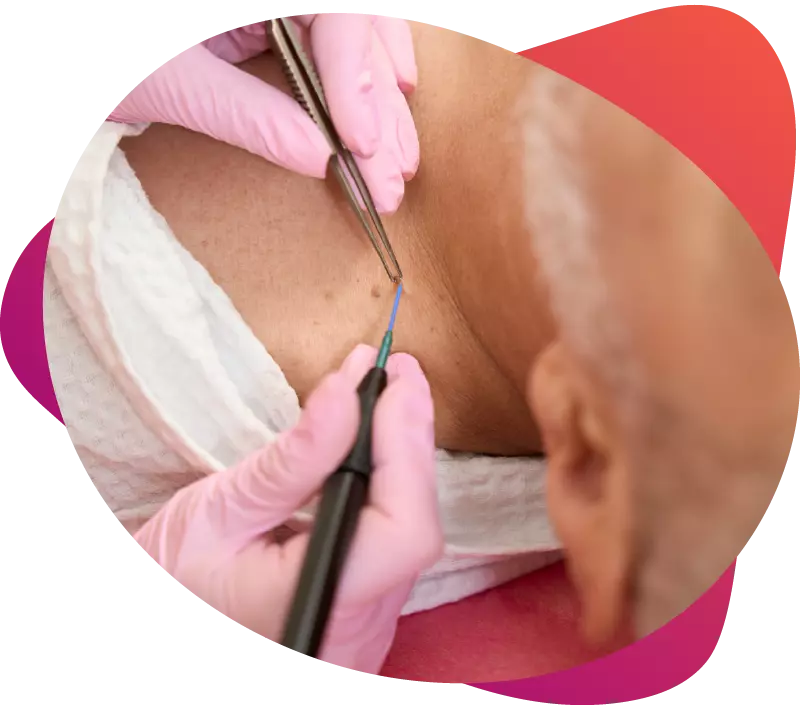 When it’s time for your procedure, someone will call you back. They’ll inject a local anesthetic to numb the tumor and the surrounding area. Your doctor will test the area to make sure the numbing took effect before they start the rest of the procedure.
Once you’re numb, your doctor will use a long tool with a loop on one end to scrape off the skin cancer tumor. This is the curette. Next, they’ll apply an electrode or a chemical to the area, which lowers bleeding and gets rid of any cancer cells that are left.
Your doctor may go through this process two or three times. The number of times they do it depends on how deep the cancer is. When they’re done, they’ll bandage the wound.
Recovering From Electrodesiccation and Curettage
Most people recover quickly after this procedure, and many are even able to drive themselves home. It can take several weeks for the wound to heal, though, and you’ll need to take care of it during that time. You may also have cryotherapy, another type of treatment, afterward to make sure all of the cancer cells are gone.
Your healthcare provider will tell you how to care for your wound. If they don’t or if you lose the instructions, there are some general instructions you can follow until you talk to them. Wound care should include:
- Washing your hands before you touch the wound or change the bandage
- Taking the old bandage off carefully and washing the area gently with soap and water
- Patting the area dry before you apply a new dressing
- Using a thick ointment on the wound before applying a new dressing
- Bandaging the wound with an adhesive bandage or a pad that doesn’t stick and medical tape
There are a few things you should avoid while your wound is healing, too. These include:
- Scrubbing the affected area
- Submerging the area in any water, including lakes, streams, pools, hot tubs, and baths
Avoid these to heal well. Your doctor will tell you when these are safe again.
Are There Possible Complications to Electrodesiccation and Curettage?
Side effects and complications from electrodesiccation and curettage aren’t common, but you might experience them. Look out for:
- Signs of an infection, including discoloration at the site and spreading from it, thick drainage or pus oozing from the site, swelling, and pain
- Crusting at the site
- Scarring of the site
- Bleeding that doesn’t stop even after you apply firm pressure to the area for 15 minutes
Following your care instructions gives you the best possible chance of avoiding these issues. They can still happen, though, and you should follow up with your doctor right away if they do.
Electrodesiccation and curettage will usually leave a small, round scar that’s usually flat and white, too. Because of this, your doctor may recommend it on areas of the body where a scar won’t affect your overall appearance very much, like your abdomen or upper thighs. While the treatment will work on other parts of the body, you’ll need to decide if you want to deal with a scar in more obvious locations.

Talking to Your Doctor About Electrodesiccation and Curettage
If you have nonmelanoma skin cancer, talk with your doctor about your treatment options. If you prefer one treatment over another, ask whether it may work for you and how it could affect your results. Your doctor should explain the risks and benefits of each option in a way you can understand.
You and your healthcare team can work together to choose a treatment that fits your needs. If you have questions or feel your concerns aren’t being heard, let your doctor know.
Join the Conversation
On MySkinCancerTeam, people share their experiences with nonmelanoma skin cancer, get advice, and find support from others who understand.
What types of medical procedures were used to treat your nonmelanoma skin cancer? Let others know in the comments below.
- Curettage and Electrodesiccation — American Cancer Society
- Curettage and Electrodesiccation — Mercy Health
- Basal Cell Carcinoma Treatment — Skin Cancer Foundation
- Squamous Cell Carcinoma Treatment — Skin Cancer Foundation
- Curettage and Electrodessication Combined With Photodynamic Therapy in the Treatment of Large Squamous Cell Carcinomas in Unfit and Frail Patients — BMJ Case Reports
- What Are Risk Factors for Surgery? — Anesthesia Patient Safety Foundation
- Electrodesiccation and Curettage (ED&C) — Fairfield Dermatology
- Skin Cancer Treatment — OC Skin Institute
- Curettage and Electrodesiccation — Cancer Council NSW
- Post-Procedure Care: Electrodesiccation and Curettage — DermWellesley
Related
- What are the symptoms of basal cell carcinoma on the eyelid? See answer
- What helps with skin cancer treatment side effects? See answer
- Which doctors treat skin cancer? See answer
- What can I expect from radiation therapy for skin cancer? See answer







 Your Privacy Choices