
 Join
Join
Nonmelanoma Skin Cancer: 6 Facts


Key Takeaways
- Nonmelanoma skin cancer, which includes basal cell carcinoma and squamous cell carcinoma, is the most common form of skin cancer and can look different from person to person. View all takeaways
Sign up for free to view the full article summary.
Continue with EmailSkin cancer can develop in the basal cells, squamous cells, or melanocytes (melanoma). About 80 percent of nonmelanoma skin cancers are basal cell carcinoma (BCC). The other 20 percent are squamous cell carcinoma (SCC).
There are also several other types of nonmelanoma skin cancer, but they’re rare. Melanoma makes up a much smaller percentage of skin cancers (around 1 percent) but causes significantly more cancer deaths.
Here’s what to know about nonmelanoma skin cancer, including what it looks like, how it’s diagnosed, and what treatments are available.
1. Nonmelanoma Skin Cancer Doesn’t Look the Same on Everyone
Both basal cell and squamous cell carcinoma can appear in different ways. For some people, the cancer may look like a sore or lump, whereas others may think they have a new pimple or mole. In some cases, the spot may look irritated or swollen.
Both BCC and SCC are most common in people with fair skin. These types tend to develop on parts of the body that get the most sun exposure, such as the face, arms, chest, or back.
What Does Basal Cell Cancer Look Like?
BCC usually looks like a flesh-colored, round bump. It can also appear as a pearly growth or a patch of pink skin.
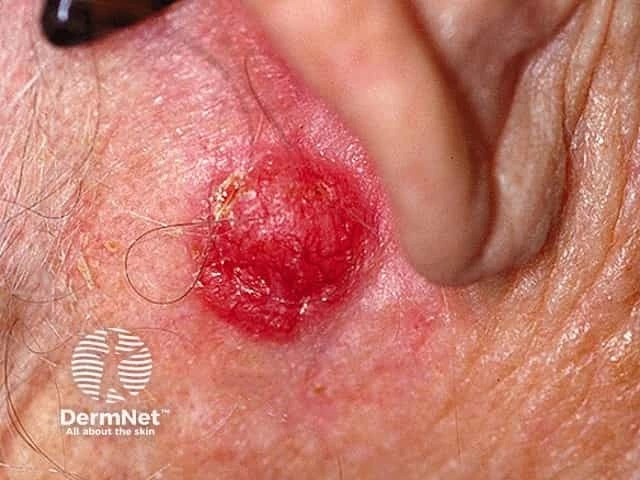
What Does Squamous Cell Cancer Look Like?
SCC often appears as a red or dark bump on the skin or as a scaly patch. You may mistake it for a sore that keeps reopening or an area of dry skin.
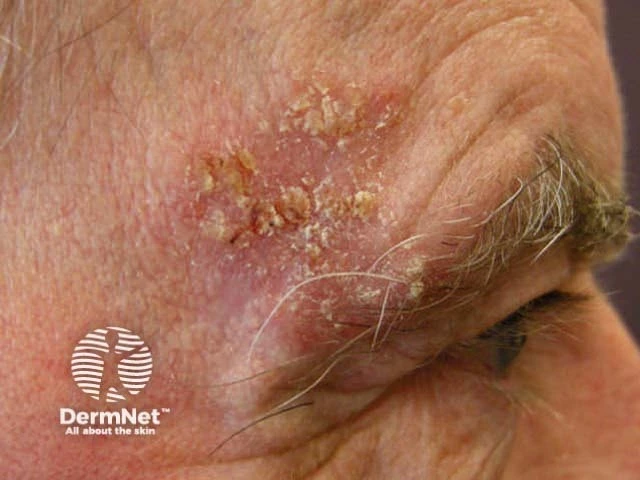
(CC BY-NC-ND 4.0/DermNet)
When To See Your Doctor
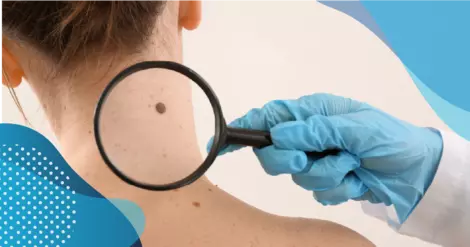
Some common warning signs of skin cancer include a mark that bleeds and doesn’t heal on its own or a new growth that seems to be getting bigger.
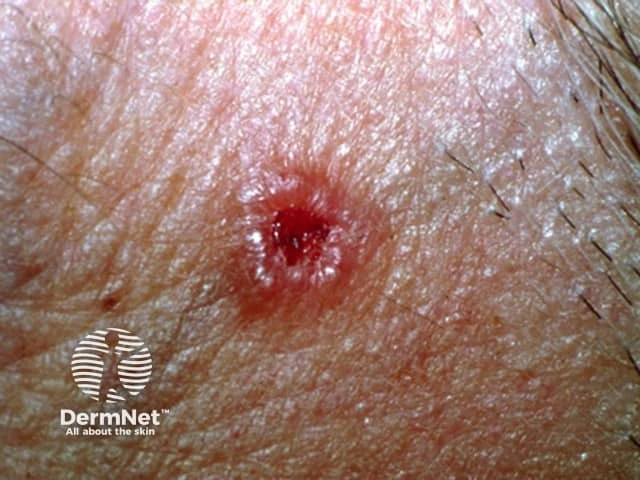
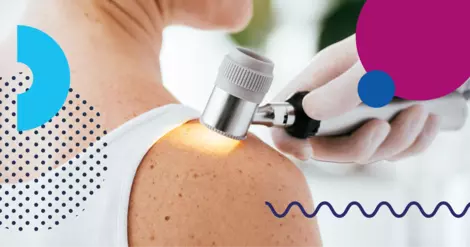
You should check your skin regularly for any changes. Tell your dermatologist about markings that concern you so they can take a closer look and recommend follow-up if needed.
2. A Biopsy Can Diagnose the Type of Skin Cancer
If your dermatologist thinks you may have skin cancer, they’ll do a biopsy. In this minimally invasive procedure, a small sample of the affected skin is removed and sent to a lab for testing.
What’s Next?
If a biopsy result is positive for nonmelanoma skin cancer, more testing may be needed. In rare cases, depending on how severe the skin cancer is, a healthcare provider may use blood tests or imaging scans to check for metastasis (cancer spreading to other parts of the body).
Basal cell carcinomas are usually treated and cured before they can spread. However, if left untreated, they may grow deeper into the bones and nerves, causing disfigurement.
SCC has a slightly higher risk of spreading, but early detection and treatment can lower the risk.
3. Nonmelanoma Skin Cancer Can Be Treated Several Ways
Recommendations for nonmelanoma skin cancer treatment depend on several factors, including:
- The cancer’s location
- The cancer’s size
- Your age
- Your overall health
Surgery
Several types of surgery can treat nonmelanoma skin cancer. Small tumors may be treated with curettage and electrodesiccation or a shave excision, which removes the top layer of skin with a blade.
A standard excision, which removes the tumor and some surrounding skin, is another common option. However, for higher-risk tumors that are large or have recurred (come back) or tumors in cosmetically sensitive areas, Mohs surgery can lower the risk of recurrence in BCC to less than 5 percent.
Cryotherapy
Cryotherapy, or freezing the tumor, is another option for small basal cell or squamous cell tumors. However, it’s not a good option for large or deep tumors, and it isn’t used on certain areas of the scalp, eyelids, ears, nose, or legs.
Radiation Therapy
Radiation therapy may be used for large nonmelanoma tumors or along with surgery. It may also be an option for people who don’t want or can’t have surgery. However, radiation therapy is generally avoided in younger people.
Advanced Treatments
Chemotherapy, targeted therapy, and immunotherapies may be treatment options for people with advanced BCC or SCC.
Cemiplimab is an immunotherapy available for people with advanced BCC. For advanced SCC, immunotherapy options may include cemiplimab, pembrolizumab, or cosibelimab.
4. Nonmelanoma Skin Cancer May Return
After treatment, nonmelanoma skin cancer can come back. Squamous cell cancer has a higher risk of recurrence than basal cell cancer. This risk is higher when:
- The SCC tumor is at least 4 centimeters wide.
- The cells look very abnormal.
- The cancer is desmoplastic (an aggressive subtype).
- The tumor is deep (more than 6 millimeters).
- Cancer cells have spread into the fat beneath the skin, a blood vessel, a lymph node, or a deeper nerve.
In general, smaller tumors are less likely to come back than bigger ones. Fortunately, effective treatment is often still possible if skin cancer returns.
5. Some Cases Can Be Prevented
Ultraviolet (UV) light is a major risk factor for basal cell and squamous cell skin cancer. Avoiding sun damage and taking steps to protect your health may help lower your risk of skin cancer.
Stay Safe in the Sun
Skin damage builds up over time from repeated sun exposure and sunburns. It’s important to practice sun safety throughout your life, including:
- Covering exposed skin with clothing
- Staying in the shade
- Using sunscreen with an SPF of at least 30
- Wearing a hat and sunglasses
Don’t Go Tanning
It’s also important to know that tanning beds are not safe. They give off cancer-causing UV light and should be avoided.
If you want a tan, spray tans or sunless tanning lotions are the safest options. They don’t use UV radiation and aren’t known to directly cause cancer.
Quit Smoking
People often think of smoking as a risk for lung cancer. However, it also raises the risk of many other cancers, including squamous cell skin cancer.
If you smoke, it’s never too late to quit. You can call the American Cancer Society at 800-227-2345 for support.
6. Some Therapies Raise the Risk of Nonmelanoma Skin Cancer
Healthcare professionals prescribe medications when they believe the benefits outweigh the potential side effects. However, understanding how certain treatments may affect your skin cancer risk can help you be more proactive about checking your skin.
Some people take medications that suppress the immune system. These drugs can help control autoimmune diseases and improve the success of organ transplants, but they can also raise the risk of skin cancer.
Radiation therapy used to treat certain cancers or skin conditions such as acne (a practice no longer used today) may also increase the risk of nonmelanoma skin cancer.
Join the Conversation
On MySkinCancerTeam, people share their experiences with skin cancer, get advice, and find support from others who understand.
What was the skin cancer diagnosis and treatment process like for you? Let others know in the comments below.
Related
- What is electrodesiccation and curettage for skin cancer? See answer
- What are the treatments for basal cell carcinoma? See answer
- Are there less common symptoms of skin cancer? See answer
- Who needs skin cancer screening? See answer




 Your Privacy Choices