
 Join
Join
5 Symptoms of Nonmelanoma Skin Cancer


Key Takeaways
- Nonmelanoma skin cancers like basal cell carcinoma and squamous cell carcinoma can cause changes to the skin that are often subtle and hard to notice, but they are highly treatable when caught early. View all takeaways
Sign up for free to view the full article summary.
Continue with EmailNonmelanoma skin cancers such as basal cell carcinoma (BCC) and squamous cell carcinoma (SCC) may cause changes to the skin’s appearance. These symptoms are often subtle and hard to notice.
BCC and SCC are highly treatable when detected early, so it’s important to know the symptoms and get regular skin checks.
Keep reading to learn five signs of nonmelanoma skin cancer.
1. An Open Sore
It’s common to develop sores on the skin, but they usually heal and go away within a short time. If a sore doesn’t heal after a week or so, or if it heals and comes back, it may be a sign of skin cancer.
Skin sores are also called ulcers. When they’re cancerous, they may look like a normal scab or crust over after oozing fluid or blood.
These sores can be a symptom of BCC or SCC and should be checked by a dermatology expert or another healthcare professional as soon as possible.
2. Unusual Patches of Skin
Tell a doctor about any new or unusual patches that appear suddenly and don’t go away. This includes patches that are:
- Raised
- Flat
- Itchy
- Wartlike
- Painful
- Scaly
- Bleeding
These skin patches are sometimes darker than the surrounding skin. On lighter skin, irregular or scaly patches may appear red, while on darker skin they may be dark brown.
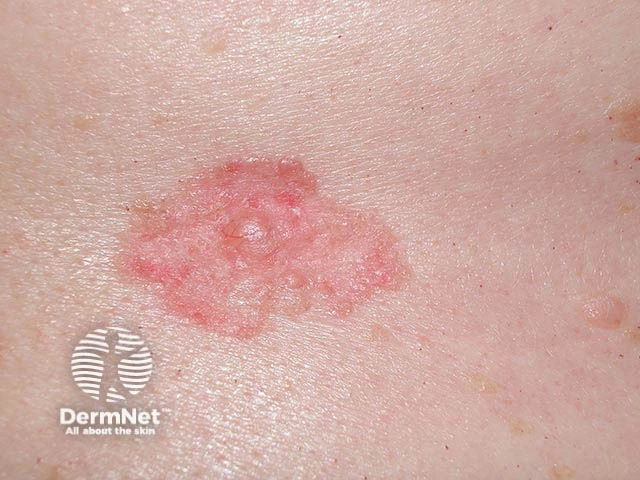
Other patches may develop depending on the type of nonmelanoma skin cancer a person has. For example, invasive basal cell carcinoma may cause a scarlike patch that looks shiny and has irregular borders.
3. A New Lump, Spot, or Growth
Pay attention to any new spot, growth, or lump on your skin. These may appear suddenly or develop slowly. Their appearance can also change over time.
Skin growths may look different from person to person. On lighter skin, they may be pink, red, or pearly white. On darker skin, they may appear black, brown, or pearly.
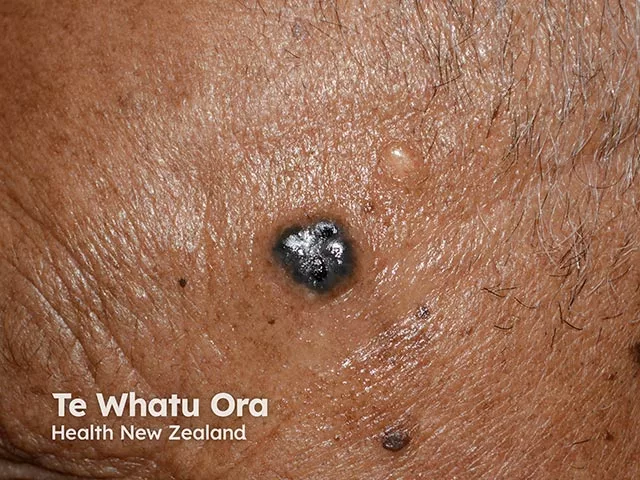
Some people may notice a bump with tiny blood vessels that look like thin branching lines under the skin.
Certain types of skin cancer may lead to other types of bumps. For instance, squamous cell carcinoma may cause growths with raised edges surrounding a lower area in the middle.
4. A Sore on Your Lip or Inside Your Mouth
Although most skin cancers develop on the skin, some squamous cell cancers can affect the mucous membranes. These tissues line the nose, mouth, and throat. If you notice a scaly, sore, or rough patch on your lips or inside your mouth, reach out to your doctor right away.
Sometimes SCC can appear as thickened skin on the lower lip. People at higher risk of this symptom include:
- People who use chewing tobacco
- People who smoke
- People whose lips are often exposed to wind or sun
5. Changes to Existing Skin Spots
If you notice changes to spots or bumps on your skin, such as a difference in shape, color, or texture, contact a doctor. Skin lesions may also suddenly become painful or itchy.
These changes could be a sign of nonmelanoma skin cancer, such as basal cell or squamous cell carcinoma. They may also be symptoms of melanoma, another skin cancer type.
Some changes in lesions or moles are normal and may occur over time. For instance, moles may lighten in color or grow hair. This can make it hard to tell which changes are concerning.
It’s important to have all changes checked by a dermatologist or another skin specialist so they can determine whether you might have early signs of skin cancer.
Where Nonmelanoma Skin Cancer Occurs
Skin cancer can develop anywhere on your body, including the genitals or existing scars. However, in most cases, symptoms appear on areas that get the most sun exposure.
Basal cell carcinoma is most likely to appear on the:
- Ears
- Neck
- Face
- Scalp
- Chest
- Back
- Shoulders
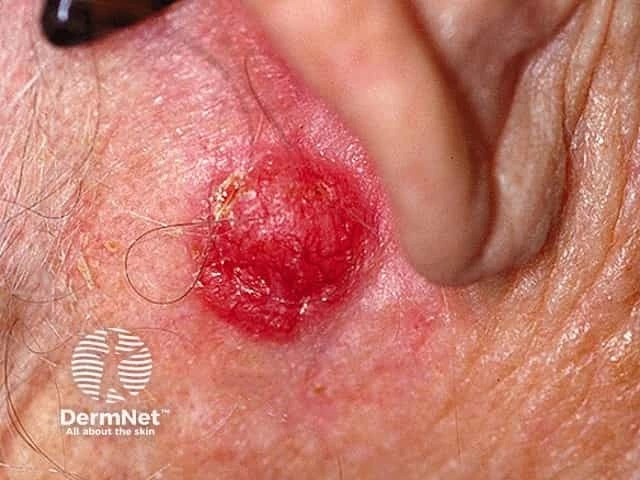
Squamous cell carcinoma is most likely to appear on the:
- Scalp
- Face
- Ears
- Forearms
- Shoulders
- Backs of your hands
- Lips
- Neck
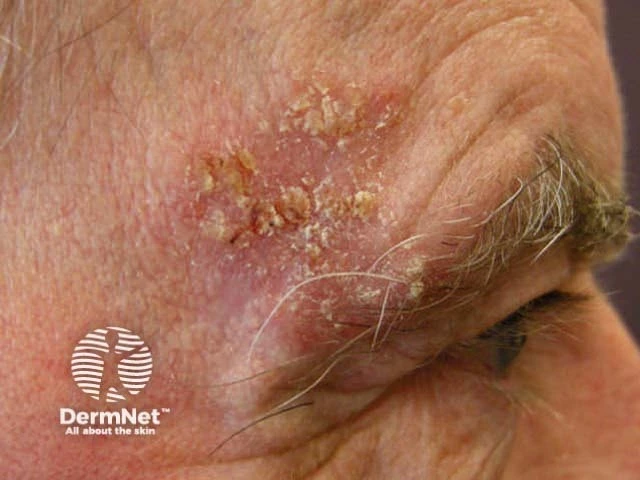
Speak With Your Doctor
Most dermatology experts recommend checking your skin at least once a month for any changes. Look for lesions, patches, and moles that look different from others on your body. You should also watch for new and changing areas of skin.
If you can’t easily see the skin on your back or scalp, use a mirror for a closer look. You can also ask a friend or family member to help. If you notice any concerning changes, see a healthcare provider as soon as possible.
Your doctor can examine the areas of skin that worry you, along with checking the rest of your body. If they find anything suspicious, they may recommend additional tests for skin cancer, such as a skin biopsy (removing a small tissue sample to be examined under a microscope).
Tell your doctor if you have any possible skin cancer risk factors, such as a family history or frequent sun exposure and sunburns. This information can help them decide how often you should have skin checks.
Join the Conversation
On MySkinCancerTeam, people share their experiences with skin cancer, get advice, and find support from others who understand.
Which symptoms did you notice before receiving a skin cancer diagnosis? Let others know in the comments below.
- Nonmelanoma Skin Cancer Signs and Symptoms — Moffitt Cancer Center
- Nonmelanoma Skin Cancer — Johns Hopkins Medicine
- Basal and Squamous Cell Skin Cancer Symptoms — American Cancer Society
- Non Melanoma Skin Cancer Symptoms — Cancer Research UK
- Skin Cancer — The University of Texas MD Anderson Cancer Center
- Basal Cell Carcinoma Warning Signs and Pictures — Skin Cancer Foundation
- Squamous Cell Carcinoma Warning Signs and Pictures — Skin Cancer Foundation
- Head and Neck Squamous Cell Carcinoma — MedlinePlus
- Squamous Cell Carcinoma of the Skin — Mayo Clinic
- Squamous Cell Skin Cancer — University of Michigan Health
- Nonmelanoma Skin Cancer — Cleveland Clinic
- Nonmelanoma Skin Cancer — Mayo Clinic
Related
- How common is skin cancer? See answer
- What does squamous cell carcinoma look like? See answer
- What is actinic keratosis and can it turn into squamous cell carcinoma? See answer
- What is Bowen disease (squamous cell carcinoma in situ)? See answer







 Your Privacy Choices